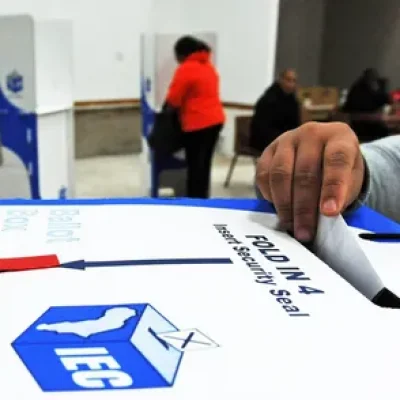

As South Africa moves closer to the highly anticipated 2026 Municipal Elections, political activity across the country is intensifying, with parties mobilizing supporters, communities debating local service delivery issues, and voters preparing to make decisions that could shape the future of municipalities nationwide.
The elections, scheduled for 04 November 2026, are expected to become one of the most competitive local government contests in recent years, as established political parties and emerging movements battle for control of municipalities, metros, and local councils.
A Defining Election for Local Government
Municipal elections play a critical role in South Africa’s democracy because they directly affect the day-to-day lives of citizens. Unlike national elections, municipal polls focus heavily on local governance, including:
- Water supply
- Electricity delivery
- Road maintenance
- Waste collection
- Housing projects
- Community safety
- Local economic development
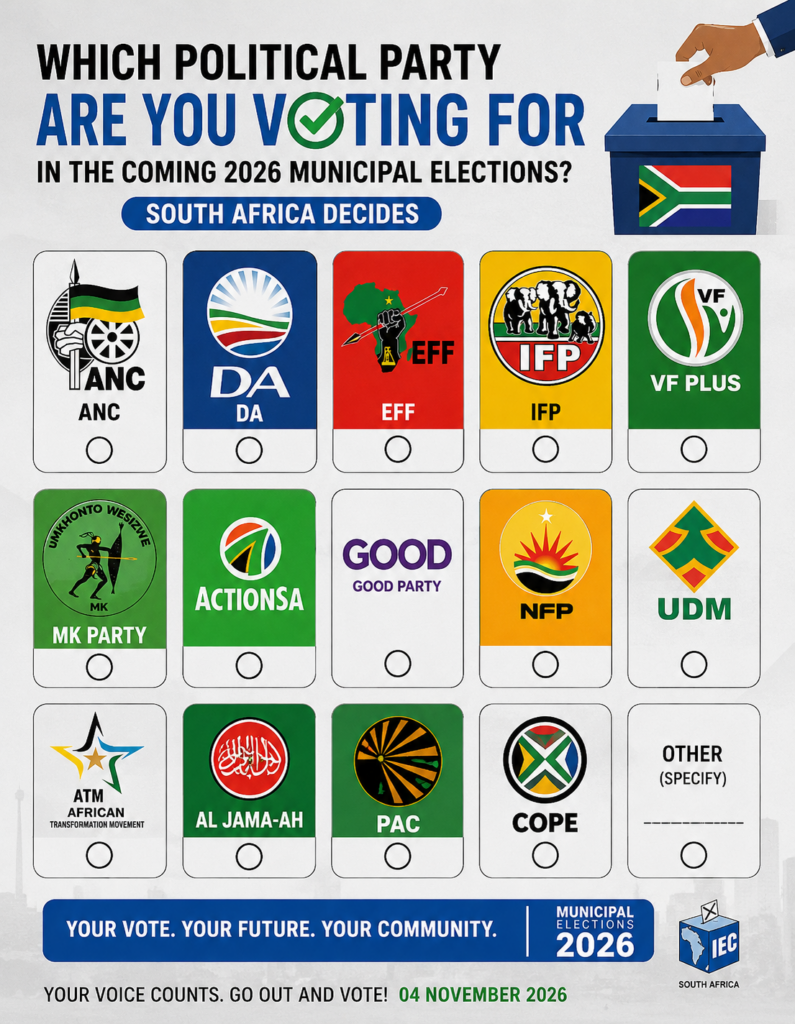
For many South Africans, frustrations over service delivery failures, unemployment, infrastructure collapse, corruption allegations, and rising living costs are expected to dominate voter conversations ahead of the elections.
Political analysts believe the 2026 vote could significantly reshape the local political landscape, especially after the dramatic shifts seen in previous elections where coalition governments became increasingly common.
Major Political Parties Gear Up
Several political parties are already positioning themselves for aggressive campaigns across provinces and municipalities.
African National Congress (ANC)
The ANC remains one of the country’s most influential political organizations and will be seeking to regain voter confidence in municipalities where support has weakened over recent years.
The governing party is expected to campaign heavily on infrastructure development, economic recovery, job creation, and stabilizing municipalities facing financial difficulties.
Democratic Alliance (DA)
The DA is expected to focus its campaign on governance, anti-corruption measures, clean audits, and service delivery improvements in municipalities it currently governs.
The party hopes to expand its influence beyond traditional support bases and strengthen its position in key metros and towns.
Economic Freedom Fighters (EFF)
The EFF continues to attract younger voters and communities demanding radical economic transformation, land reform, and stronger state intervention in the economy.
The party is expected to campaign aggressively in urban and township communities.
Inkatha Freedom Party (IFP)
The IFP has seen growing support in parts of KwaZulu-Natal and may continue expanding its municipal footprint through grassroots structures and traditional community support.
MK Party and Emerging Movements
New political formations and smaller parties are also expected to play a major role in coalition politics, especially in municipalities where no single party secures an outright majority.
Political observers believe coalition negotiations could once again determine leadership in several municipalities after the election.
Coalition Politics Likely to Continue
One of the biggest talking points ahead of the elections is the future of coalition governments.
Over recent years, coalition-led municipalities have become increasingly unstable in some regions, with frequent leadership changes, motions of no confidence, and disagreements between political parties disrupting governance.
Analysts say voters may use the 2026 elections either to strengthen coalition politics or return stronger mandates to larger parties capable of governing independently.
However, many believe coalition governments are now a permanent feature of South African politics.
Young Voters Could Influence Results
Young voters are expected to become one of the most influential groups in the upcoming elections.
Issues such as:
- Youth unemployment
- Education opportunities
- Crime
- Housing access
- Entrepreneurship support
- Digital access
are likely to dominate conversations among younger South Africans.
Political parties are increasingly turning to social media campaigns, online debates, podcasts, and digital outreach programs to attract first-time voters and younger audiences.
Independent Candidates on the Rise
The rise of independent candidates and local civic movements may also impact traditional political structures.
In many communities, residents are showing growing interest in supporting candidates focused specifically on local issues rather than national party politics.
Some independent candidates are expected to campaign on promises of:
- Accountability
- Community engagement
- Transparent governance
- Faster service delivery
Voter Registration and Participation
The Independent Electoral Commission (IEC) is expected to begin extensive voter education and registration drives ahead of the elections.
Citizens are encouraged to:
- Verify registration details
- Update addresses
- Register to vote
- Participate in voter education programs
Political leaders and civil society organizations continue urging South Africans to participate actively in the democratic process.
Service Delivery Remains Central Issue
Across many municipalities, residents continue expressing concerns over:
- Water shortages
- Electricity outages
- Poor roads
- Sewage spills
- Corruption allegations
- Housing backlogs
Experts believe parties that successfully address practical local issues may gain strong support from frustrated communities demanding visible improvements.
Election Campaigns Expected to Intensify
As the election date approaches, campaigning is expected to intensify across the country, with rallies, debates, manifesto launches, door-to-door campaigns, and televised discussions likely to dominate the political atmosphere.
Security agencies are also expected to monitor election-related tensions closely to ensure peaceful campaigning and voting processes.
South Africa’s Democracy in Focus
The 2026 Municipal Elections are being viewed as another important test of South Africa’s democracy, political accountability, and public participation.
For millions of South Africans, the elections represent more than politics — they are about improving communities, strengthening local government, and shaping the future of towns, cities, and municipalities across the nation.
With political competition increasing and voter expectations rising, the road to November 2026 is expected to be one of the country’s most closely watched local government election periods in recent history.